

Evidence-Based Education and Research in Animal Training and Behavior
2026 IAABC Foundation Animal Behavior Conference
Events
Visit our Events page for more details on our fall and winter lineup!
Live! Building Capacity or Changing the Demand: December 6
Shelter! 2027: January 30
Flock! 2027: February 27
2027 Animal Behavior Conference: April 30-May 2, 2027

Courses & webinars
The IAABC Foundation offers a selection of instructed courses, mentorships, self-studies, and webinars all for CEU credits. Click into any one of the courses to learn more. Click on the Courses menu for a full listing.


The IAABC FOUNDATION JOURNAL
ISSUE 34 | OCTOBER 2026
Featured Article
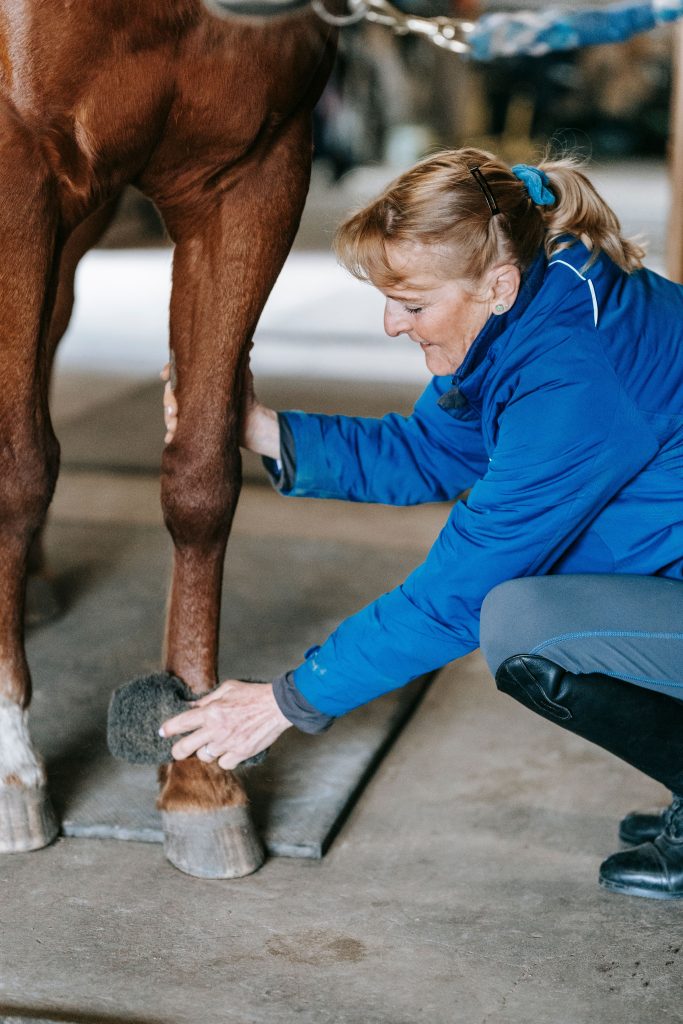
Preparing a Gelding for a Leg Ultrasound
This case study presents steps taken to prepare a gelding for a leg ultrasound, a procedure that may involve stress and significant injury risks for the veterinarian involved. As…
By Coraline Plumat, CEBC, Certified Trauma-Informed Horse Trainer and Certified Professional Horse Trainer
Understanding Horse Behavior and Training Knowledge in Therapeutic Riding
Equine-assisted services (EAS), including adaptive and therapeutic riding (AR/TR), have expanded considerably over the past three decades, bringing increased scrutiny to instructor competency, horse welfare, and participant safety…
By Carolina Signorelli
Canine Search and Rescue
Animal professionals may have a client ask about K9 Search and Rescue (SAR) and if their dog would be a candidate or what kind of dog to get. This…
By Sue Bulanda
PART I Love and Peace – A Threshold-Based Reintroduction Protocol for Two Brother Cats Following Redirected Aggression with Complicating Medical Factors
This case study is the first of a two-part account of the reintroduction of two male littermate cats, Love and Peace, following severe redirected aggression complicated by feline hyperesthesia…
By Maggie Wu, M.Ed., CCBC, FFCP
Research
The IAABC Foundation Research Team is interested in finding participants for a study regarding separation related behavior in cats! This would be a simple 15-20 minute survey for you to complete without any further commitment needed!
Eligible participants would:
- Be 18 or older.
- Be single cat households.
- Have cats between the ages of 1 and 6 years of age.
- Have cats who have been in the home 2+ months.
- Have a cat who is not on any psychotropic medications.
- Have indoor cats.
- And are only in the United States.
You would need to meet all criteria above. Additionally, it is imperative that the cat be free from any diagnoses or medical conditions that may confound examination of cat behavior in this study.
If you think you may fit this description and would like to participate please access the survey link here.
Any questions? Please contact felineresearch@iaabcfoundation.org.
 Dr. Pankratz graduated with her veterinary degree from the University of Wisconsin – Madison in 2014 and pursued a small animal rotating internship in New York. She completed her behavioral medicine residency program at North Carolina State University and became board certified by the American College of Veterinary Behaviorists in 2018. She stayed on at NC State for her fellowship and as a clinical instructor before joining the Animal Behavior Clinic in Portland, OR in 2019. She teaches veterinary behavior to the public, veterinary students, and fellow veterinarians through conferences hosted throughout the US and Canada.
 Morgane Van Belle graduated as a veterinarian specialising in companion animals from Ghent University (Belgium) in 2022. She subsequently started as an academic assistant and PhD student at the Ethology and Animal Welfare Research Group at Ghent University. Her PhD research (2022–2026) focuses on the social behaviour and relationships of companion cats. The ultimate aim of the project is to promote harmonious multi-cat households and optimise feline welfare. Morgane has published multiple scientific articles in peer-reviewed journals and has presented her research at international conferences. Her review on the use of citizen science to study cat behaviour was selected as the first Editors’ Pick of the journal Applied Animal Behaviour Science (Van Belle et al., 2024, 10.1016/j.applanim.2023.106133). Her conference presentation on the Ethogram of Feline Social Interactions received the 2025 iCatCare Welfare Research Award. Updates on the research can be found on social media via Instagram (@ugent_feline_research) and Facebook (Feline Research – UGent). Since 2025, Morgane has also been completing a residency at the European College of Animal Welfare and Behavioural Medicine (AWSEL), further expanding her expertise in animal welfare beyond cats.
 Dr. Udell is a Certified Applied Animal Behaviorist and Professor of Animal Science at Oregon State University, where she teaches courses in animal behavior, cognition, and learning. She earned her PhD in Psychology, with a secondary field in Behavioral Ecology, from the University of Florida. Her research has explored many areas of animal behavior and cognition, with a special focus on the social behavior of cats and dogs and the relationships they share with humans. She is especially passionate about translating the science of sociability and attachment into practical strategies that support companion animal welfare and enhance the wellbeing of animals and the people who care for them.
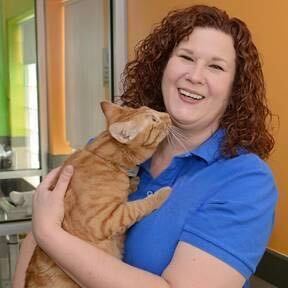 Lisa Stemcosky (she/her), the owner of PawLitically Correct, is a Certified Cat Behavior Consultant (CCBC) with the International Association of Animal Behavior Consultants (IAABC) and a Fear Free Certified Trainer. With over 15 years of experience in private behavior consulting, modification, and shelter behavior, Lisa is a trusted expert in her field. Based in Washington, DC, she offers comprehensive behavior modification plans and support to clients locally, nationally, and internationally, helping to keep their cats happy in their homes.
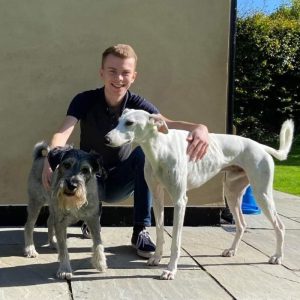 Daniel Shaw BSc (Hons), MSc, CDBC is an animal behaviourist specialising in canine and feline behaviour. He works with dogs and their owners to address a range of dog training and behavioural challenges, including aggression, fear, and trauma-related issues, with a focus on practical, evidence-based solutions that improve both welfare and day-to-day life for both ends of the lead. Daniel holds an MSc in Neuroscience from King’s College London and a BSc (Hons) in Psychology. He is a Certified Dog Behaviour Consultant (CDBC) and a Graduate Member of the British Psychological Society. His work is informed by current research, and he continues to stay up to date with the latest scientific understanding of canine behaviour. Alongside his clinical work, Daniel also acts as an expert witness in legal cases involving dog behaviour. His expertise is sought by solicitors and local authorities, with his reports accepted in both criminal and civil proceedings. Daniel is also a leading educator in the field of dog behaviour, regularly presenting at national and international conferences, as well as delivering webinars and seminars for professionals. His talks focus on canine behaviour, neurobiology, and training, helping to bridge the gap between science and practical application. He has been invited to speak at a range of industry events and has presented to the All-Party Parliamentary Group on Animal Welfare on issues relating to dog behaviour and public safety.
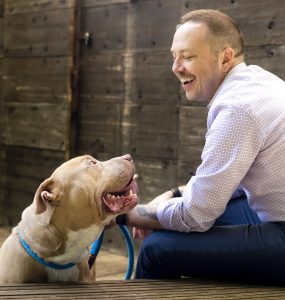 Dr. Chris Pachel is a board-certified veterinary behaviorist and is the owner and lead clinician at the Animal Behavior Clinic in Portland, Oregon. Dr. Pachel lectures worldwide, teaches courses at multiple veterinary schools, and has authored numerous articles and book chapters for veterinarians and pet owners. He is a sought-after expert witness for legal cases and serves on the Editorial Advisory Board for dvm360. He is a Vice-president of Veterinary Behavior for Instinct Dog Behavior and Training and co-owner of Instinct Portland, which opened in the fall of 2020. He is also a co-founder of LIMA Beings, an online community of people who seek to apply the power of communication and learning principles to our interactions with others, shaping behavior in compassionate and effective ways.
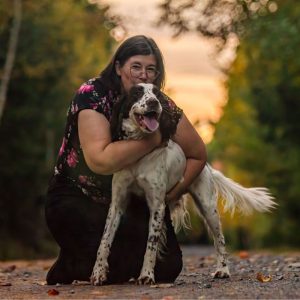 Barb Deg, RVT, CDBC resides in Nova Scotia, where she operates Front N’Scenter Animal Behaviour & Consulting. She started her professional career with animals as a Registered Veterinary Technician and went on to find her passion for all things behaviour and training.
 Alice Chau, BA, PGCertCAB, is a clinical animal behaviourist specialising in feline behaviour, with over 15 years of professional experience. Based in Dublin, Ireland, she provides behaviour consultations, professional education and public outreach, with a particular interest in making evidence-based feline behaviour advice accessible to diverse communities.
 Allie Bender, CDBC, CPDT-KA, SBA is the founder and co-owner of Pet Harmony Animal Behavior & Training, co-author of Canine Enrichment for the Real World, and co-host of the Enrichment for the Real World Podcast. Through Pet Harmony, Allie helps dogs and cats with behavior issues and their people have a more harmonious household all over the world. She also empowers and educates other behavior and training professionals to provide outstanding services to their clients.
 Dr. Wailani Sung is a Board-Certified Veterinary Behaviorist dedicated to improving the wellbeing of animals and strengthening the human–animal bond. Dr. Sung currently serves as Senior Director of Animal Admissions and Wellbeing at Joybound People and Pets in Walnut Creek, California. In this role, she oversees three key areas: the transfer of pets from municipal shelters, the assessment and management of the shelter’s behavior population, and the training classes and consultations provided to privately owned pets. She also advises animal shelters nationwide on individual case evaluations and the development of effective behavior programs.
 Dr. Valli Parthasarathy is the owner of and a veterinary behaviorist at Synergy Veterinary Behavior, a behavior specialty practice in Portland, OR. She helps families whose dogs, cats, birds, horses, and other species show problematic behaviors. Her goal is to help support positive behavioral change through greater mutual understanding and improved relationships between people and their animals. She has been invited to speak at national and international conferences on topics in veterinary behavior ranging from early recognition of problem behavior and treating behavior problems in various species to making veterinary care less stressful for patients. She regularly collaborates with general practice veterinarians and specialty clinicians, providing behavioral insight and support as part of a multidisciplinary approach to complex cases.
 A passion for animal welfare, canine behaviour, has been the cornerstone of Tom’s (he/him) career, spanning over 15 years in shelter and rescue. This experience, alongside a drive to better support shelter animals, led Tom to found Simplifying Shelter Behaviour.
 Tabitha Kucera is an Elite Fear Free and Low-Stress Handling Certified Registered Veterinary Technician, a Veterinary Technician Specialist in Behavior, a Certified Cat Behavior Consultant, and a Karen Pryor Academy Certified Training Partner.
 Susan G. Friedman, Ph.D. is a professor emeritus in the Department of Psychology at Utah State University and the owner of Behavior Works Consulting, LLC. Susan has co-authored chapters on behavior change in five veterinary texts, and her popular articles have been translated into 17 languages. Susan teaches seminars and courses on animal learning online (How Behavior Works: Living & Learning with Animals), which has been attended by students from 64 countries so far. Susan consults with zoos and animal organizations around the world and teaches yearly for the British and Irish Association of Zoos and Aquariums (BIAZA) Animal Trainer Accreditation program. She was appointed to the Fish & Wildlife Service’s California Condor Recovery Team from 2002 – 2010, after which the team was retired due to the success of the birds in the wild. Currently, she is the Chairperson of the Scientific Advisory Committee of American Humane Association (AHA) Film and TV Unit. In 2022, Susan was honored to receive the Lifetime Achievement Award from the Association of Pet Dog Trainers.
 Mindy is a clinical assistant professor in the Animal Behavior Program at Carroll University in Waukesha, WI and instructor at Virginia Tech. She is a board-Certified Applied Animal Behaviorist (CAAB).
 Melissa, a lifelong equestrian and student of the horse, is a Certified Connection Training Coach, a Shawna Karrasch R+ Mastery Course – Santa Fe graduate, a Recognized Compassionate Equestrian member and facility owner, founder of Compassionate Horse Click and has been certified by American Riding Instructor’s Association in Dressage, Hunt Seat and Western Equitation for 25+ years.
 Lindsay Palmer is a social and behavioral scientist with a PhD in Psychology and Women’s, Gender, and Sexuality Studies. In her research program, she examines psychological mechanisms that impact human and animal relationships in her work. In particular, she is interested in the complexity of human behavior and social cognition in relationships with animals to inform interventions geared toward improving these relationships.
 Laurie Lawless, CDBC is a nationally recognized expert in shelter dog behavior, with over 16 years of in behavior, sheltering, leadership, consulting, and animal cruelty response. Her career was sparked in 2008 when she rescued an 85‑lb Boxer named Charlie – his behavioral challenges launched her into the world of professional dog behavior work, and she’s been “blaming Charlie” ever since.
 Dr. Kristyn Vitale is a Certified Applied Animal Behaviorist (CAAB) and an internationally recognized expert in cat behavior. She is a researcher and educator in animal behavior, companion animal welfare, and human-animal interaction. Vitale received a Master of Environmental Science from Miami University (USA), where she studied free-ranging cat social behavior, and a Ph.D. in Animal Science from Oregon State University (USA), where she researched cat social cognition and human-animal interactions. She also served as a Visiting Research Fellow at Kyoto University (Japan) where she studied cross-cultural differences in the human-cat relationship. Vitale’s main area of expertise is focused on human-cat interactions, cat social behavior, and the impact of life experiences, such as cat training and socialization classes, on cat cognition. Her research has been internationally featured in media outlets such as Science and National Geographic, and in documentaries such as How the Cat Conquered the World (ARTE France) and Inside the Mind of a Cat (Netflix). She is the founder of Maueyes Cat Science and Education, an organization dedicated to enhancing cat welfare and strengthening the cat-human relationship through education, behavior consulting, and science outreach.
 Dr. Spaulding has a PhD in biopsychology—the study of the biological basis of behavior—and is a Certified Applied Animal Behaviorist. She is the author of The Stress Factor in Dogs: Unlocking Resiliency and Enhancing Well-Being. Dr. Spaulding teaches a variety of online courses and webinars on the science of behavior through her website,
 Katenna Jones accidentally discovered her career as a shelter volunteer in the late 90s and soon went on to earn a master’s from Brown University where she studied animal behavior, learning and cognition. Since then, Katenna has provided cat and dog behavior support to pet owners as well as educational services to various pet organizations around the World. Katenna is a published author and contributes regularly to publications, podcasts, and more. She is an Associated Certified Applied Animal Behaviorist, Certified Cat and Dog Behavior Consultant, and Certified Fear Free Trainer. Katenna recently relocated to northern NY with her two cats and four chickens.
 Dr. Julie Churchill is a Professor at the University of Minnesota College of Veterinary Medicine and a Diplomate of the American College of Veterinary Internal Medicine–Nutrition. She completed dual residencies; internal medicine and clinical nutrition, and her PhD, at the UMN before joining the faculty.
 Dr. JoAnna Platzer is an animal trainer and Zoos, Exotics, and Companion Animals lecturer in the department of Animal and Veterinary Sciences at the University of Vermont. She earned her PhD in the Applied Animal Behavior and Welfare lab at Virginia Tech under Dr. Erica Feuerbacher. Her research interests spanned several facets of behavioral and welfare and included studies with pet dogs, shelter animals, horses, and dairy cattle. Before that, she attended the University of Florida where she majored in Zoology with an emphasis on animal behavior. After graduation, she participated in research on site fidelity of Mockingbirds with the University of Florida, social behavior of Fairy-wrens with Cornell University, and comparative cognition of canines with Yale University. She has worked as a professional dog trainer for pet and shelter dogs and has trained various domestic and exotic animal species for enrichment and low-stress husbandry in zoos, conservancies, and sanctuaries.
 Jessica Wheatcraft is a Certified Dog Behavior Consultant and professional dog trainer who has worked with thousands of dogs for over 18 years. She specializes in dog to dog leash reactivity cases, with an emphasis on understanding each dog as an individual and thinking outside of the box to implement the most effective and humane training solutions. She mentors other trainers via her Leash Reactivity Mentorship for Professionals and works with pet parents virtually from all over the world. She is the founder and host of the Rethinking Reactivity Podcast and is passionate about helping reactive dogs and their humans live better lives together.
 Irith Bloom helps people create choice-rich environments that help pets live in greater harmony with humans and make the entire household happier. She is faculty at both Fenzi Dog Sports Academy and Victoria Stilwell Dog Training Academy, on the Board of Directors of the IAABC Foundation, a member of the Advisory Board for Pets for Vets, Chair Emeritus of the Education Committee of the Association of Professional Dog Trainers International (APDT), and a former CCPDT Board Member. She also volunteers for National English Shepherd Rescue. She is a sought-after presenter, and her writing has been published many times, including in her book “Your Puppy and You: A step-by-step guide to raising a freak’n awesome dog.”
 Dr. Gabriel Lencioni is a veterinarian and PhD student in Animal Welfare at the School of Veterinary Medicine and Animal Science (FMVZ) of the University of São Paulo (USP). His passion for the study of animal behavior and welfare ignited during his college years, prompting him to actively engage in organizing seminars, symposiums, courses, and other educational activities on the topic. Under the guidance of Professor Adroaldo José Zanella, Gabriel had the privilege to develop scientific projects and interact with esteemed professionals in the field. His research focuses on various aspects of animal welfare, with a particular emphasis on assessing affective states in horses using artificial intelligence, learning theory, ethical training for solving unwanted behaviors, and fear-free methodologies for veterinary interventions.
 Since 2014, Dr. Berger has been a licensed and Board Certified Behavior Analyst providing a variety of behavior change services to human clients. In 2020, she completed her Ph.D. in Applied Behavior Analysis, and in 2021 published research on combined therapy interventions for health and behavior. Dr. Berger has worked in the field of psychology as a clinician for over a decade, and has served as a psychology professor for many years. Dr. Berger additionally completed her study of positive reinforcement training strategies at the Victoria Stilwell Academy and became a VSA certified and Fear Free certified dog trainer. She currently runs a training private practice and serves as Director of Research for the IAABC Foundation.
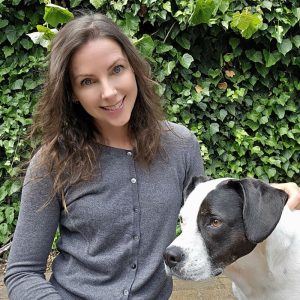 Dr Erin Jones is a researcher, educator, author and certified dog behaviour consultant based in Aotearoa New Zealand. She holds a PhD in Human–Animal Studies, an MSc in Anthrozoology, a BSc (Hons) in Anthropology and Psychology, and a postgraduate diploma in Animal Welfare. She also holds multiple professional certifications in dog training and behaviour, including CDBC, IAABC-ADT, CPDT-KA, and CANZ-ABC. Erin is the Director of the IAABC Foundation Journal and develops and teaches courses in animal behaviour, welfare and professional practice. Through her work with her own practice, Merit Dog Project, she brings together academic scholarship and applied experience to critically examine how humans understand, relate to and work with other animals. Her research and writing explore animal agency, ethics, welfare and the power dynamics inherent in human–animal relationships, particularly within dog training and behaviour consulting. She is the author of the book Beyond Behaviour: The Ethics of Dog-Centred Training (2026, CRC Press) and Constructing Canine Consent (2024, CRC Press), co-author of The Overprivileged Human (forthcoming, PM Press) and co-editor of Training for Utopia (forthcoming, CRC Press), A Research Agenda for Animal Studies (forthcoming, Edward Elgar), and Exploring Topic in Non/Human Coexistence (2025, Lantern).
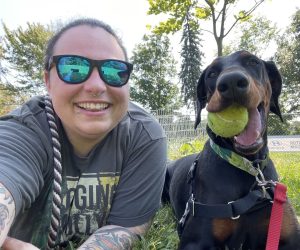 Emily Lewis has 25 years of professional experience as a vet tech, dog trainer, behavior consultant, shelter behavior consultant and professional dog handler. She is a Certified Dog Behavior Consultant with the IAABC and operates Vermont Dog Behavior, LLC. She specializes in a wide variety of behavior issues, including human directed aggression. Due to the nature of the cases that she sees, Emily is often faced with families who have experienced trauma due to their dog’s behavior. She loves working with these clients to repair and improve their relationship with their dog, with an emphasis on meeting the needs at both ends of the leash.
 Dr. Courtney L. Sexton is a Postdoctoral Researcher in the Department of Population Health Sciences at the Virginia-Maryland College of Veterinary Medicine and member of the Dog Aging Project research consortium. With a background in evolutionary biology and the human-dog relationship, her current canine science research centers One Health and One Welfare principles. As a Certified Applied Animal Behaviorist (CAAB), Courtney focuses on guiding people toward intentional living and bond forming with dogs. Courtney is a member of AAAS, the Animal Behavior Society, and the International Society for Anthrozoology (ISAZ). She also serves as a member of the Communications and Community Building committee for ManyDogs Project. An accomplished writer, Courtney is passionate about scientific outreach and journalism, and often ropes her hound, Sonder, into helping out. As both a researcher and a communicator, she works with a diverse cadre of humans, animals, institutions, agencies, and organizations. She is a Virginia Tech Research & Innovation Scholar (2024), Diverse Intelligences Summer Institute Fellow (2022), AAAS Mass Media Fellow (2020), and DCCAH Arts & Humanities Fellow (2018; 2023; 2025; 2026).
 Catja lives with a retired older cocker spaniel, who still loves to work, and a younger Australian Koolie, who is starting his first competitions. Since 2009, where she finished her instructors’ course via Canis academy, Catja has been working full-time with teaching on the topic of training, both online and at in-person workshops and at conferences. She is always on the path of continued education and curious to learn.
 Amy Learn, VMD, DACVB, IAABC-CABC, is a board-certified veterinary behaviorist and Chief of Clinical Behavioral Medicine at the Animal Behavior Wellness Center in Richmond, Virginia. She specializes in the diagnosis and treatment of behavioral disorders in dogs and cats, with particular expertise in aggression, cognitive dysfunction, and compulsive behaviors. A graduate of the University of Pennsylvania School of Veterinary Medicine, Dr. Learn is an award-winning educator, author, and speaker dedicated to advancing evidence-based behavioral medicine and strengthening the bond between pets and their families.
 Lawrence was born and raised in Washington, D.C. before relocating to NC to earn his bachelor’s degree in business management at North Carolina A&T State University. Upon graduating he was commissioned as an Army officer, where he served in duty stations in Arizona, Germany, and Iraq. While at Walter Reed Army Medical Center to recover from an illness during deployment, Lawrence became one of the first Servicemembers to complete the inaugural Dog Tags Program under the Humane Rescue Alliance (HRA; then-called the Washington Humane Society).


 Michelle Mullins CDBC, KPA CTP is the owner of Honest To Dog, LLC in Richmond, Virginia, USA and currently serves as the President of the IAABC Foundation Board of Directors. Michelle has been training dogs for 20 years and all of her work has the same objective – developing long, enriching relationships between pets and their people. In addition to her work in the pet product industry, she has worked with private clients for basic manners, puppy socialization, cooperative care training and through aggression issues. Michelle is passionate about a team approach, working closely with other trainers, certified behavior consultants and veterinary professionals.

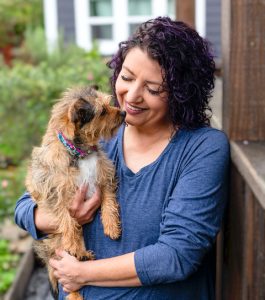 Malena DeMartini is on a mission to make the world a better place for dogs who struggle with being left alone—and for the people working so hard to help them.


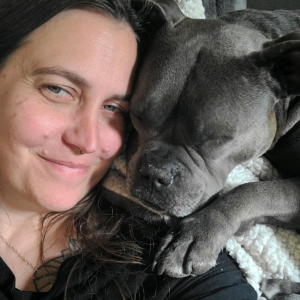 Dot Baisly is the Executive Director of the International Association of Animal Behavior Consultants (IAABC). She holds a master’s degree from Tufts University and is a Certified Dog Behavior Consultant (CDBC), Certified Cat Behavior Consultant (CCBC), and Certified Shelter Behavior Specialist (CSBS).


 Catja Pedersen lives with 2 Australian Koolies that develop her skills every day. Since 2009, when she finished her instructors’ course via Canis clicker training academy, Catja has been working full-time with teaching on the topic of training, both online and at in-person workshops and at conferences. She is always on the path of continued education and curious to learn.

 Dr. Mikel Delgado has spent more than 25 years helping people better understand cats. A cat behavior expert, researcher, and co-founder of Feline Minds, she uses evidence and practical experience to improve feline welfare and help people better understand cats. Mikel received her PhD in Psychology/Animal Behavior from UC Berkeley and was a postdoctoral fellow at the School of Veterinary Medicine at UC Davis. She is currently a Senior Scientist at Purdue University. Her research has included the health and development of orphaned neonatal kittens, cat play and predatory behavior, and the feeding behavior of cats.

 Dilara Göksel Parry was raised in Istanbul, Turkey and holds degrees in Psychology and in Comparative Literature from Oberlin College. She has worked in the animal welfare field for the majority of her professional life, including 12 years as the Cat Behavior Coordinator at the San Francisco SPCA. In 2008, she co-founded Feline Minds with Dr. Mikel Maria Delgado, where they focus on private consultations to help cat guardians live harmoniously with their cats and consult with animal welfare organizations with an emphasis on improving cat sheltering practices. In addition to staying busy with Feline Minds, Dilara works part-time at Cat Town Oakland, an innovative, cage-free rescue for cats deemed unadoptable in traditional shelter settings.
 Animals have forever been the focus of life, both at work and at home. As a professor, I have taught many courses on animal behavior, learning, communication, and research. I currently teach courses in equine behavior and welfare at Virginia Tech and at the University of Guelph. My research is on behavior and welfare in horses and dogs. I also consult on behavior cases and as a legal expert witness. When I’m not working, you will find me with my furry friends.


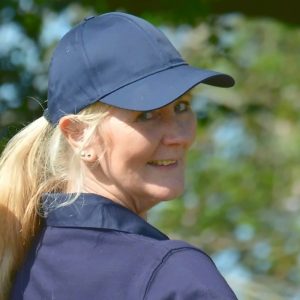 Trudi Dempsey is a horse trainer and behaviour consultant, holding credentials with both the IAABC and ABTC, and serving as a Board Member for the IAABC. Her background is in classical dressage and bitless riding, but above all she is a trainer. Her work now centres on training to improve relationships between horses and their people, through cooperative care, scentwork and training within a behaviour context.


 Dr. Kristina Spaulding has been in the dog training and behavior profession for over 20 years. She has a B.S. in Wildlife Ecology and a PhD in Biopsychology—the study of the biological basis of behavior—and is a Certified Applied Animal Behaviorist. She is particularly interested in stress, neurobiology, cognition, emotion, and well-being and how to apply these concepts to the prevention, early intervention, and treatment of behavior problems in dogs. She is an adjunct professor for Virginia Tech’s graduate program in Animal Behavior and Welfare. In addition, Dr. Spaulding teaches a variety of online courses and webinars on the science of behavior through her website and for the IAABC Foundation. She is the author of The Stress Factor in Dogs: Unlocking Resiliency and Enhancing Well-Being and regularly presents on canine behavior science at conferences and other events.
